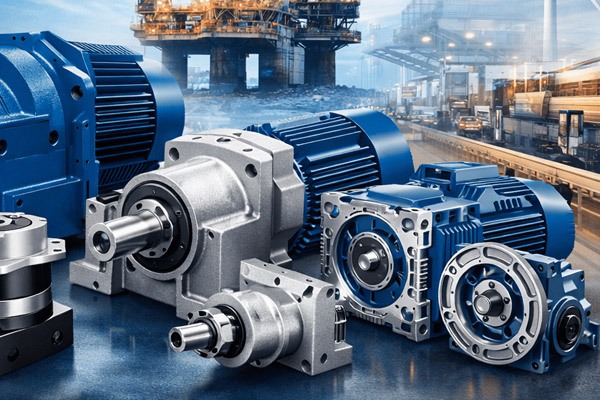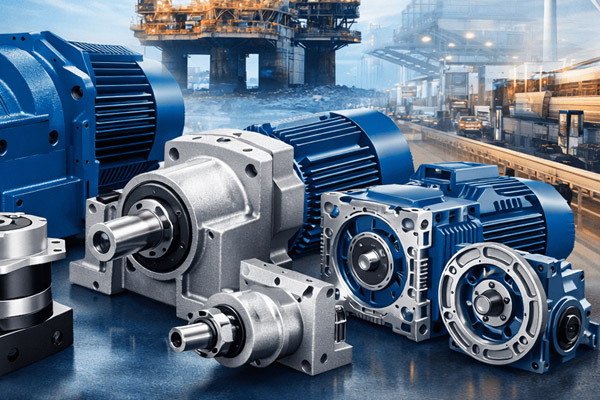
In the world of machinery and motion, raw power is often not enough. An engine or electric motor might spin incredibly fast, but what if you need immense force to turn a heavy load or precise, slow movement for a specific task? This is where the unsung hero of mechanics comes into play: the reduction gearbox. This fundamental device is crucial in everything from the car you drive to the elevator you take and the conveyor belts in factories. Understanding how it works and its benefits is key for anyone involved in engineering, manufacturing, or simply curious about the mechanics of everyday life.
The Core Principle: Trading Speed for Torque
At its heart, a speed reducer (another common name for a reduction gearbox) operates on a simple but powerful principle of mechanical advantage. Its primary function is to reduce the input speed from a motor (measured in RPM, or Revolutions Per Minute) while simultaneously increasing the output torque (the rotational force).
Think of it like the gears on a bicycle. When you shift into a low gear to pedal up a steep hill, you are making it easier to turn the wheels by spinning the pedals much faster. The bicycle’s gear system is a simple form of speed reduction—your legs move quickly with less force, and the rear wheel moves slowly but with enough torque to climb the incline. A reduction gearbox does the exact same thing for machinery.
This trade-off is defined by a key value known as the gear ratio. If a gearbox has a 10:1 ratio, it means the input shaft must rotate ten times for the output shaft to rotate once. This single output rotation will have roughly ten times the torque of the input (minus a small percentage lost to friction), making it vastly more powerful.
- Planetary Gearboxes (Epicyclic Gearing): Named for their sun-and-planet-like structure, these are known for their high efficiency, compact size, and ability to handle high torque loads. They are common in automotive transmissions, industrial robots, and anywhere space is limited but power demands are high.
- Worm Gear Reducers: These use a threaded screw (the worm) to mesh with a gear (the worm wheel). This setup offers very high reduction ratios in a single stage and a distinct advantage: the worm can easily turn the gear, but the gear cannot turn the worm. This provides a built-in locking mechanism or self-locking feature, which is perfect for applications like conveyor belts or hoists where holding a load in place is critical to safety.
- Helical Gear Reducers: These use gears with angled teeth that engage more smoothly than straight-cut (spur) gears. This results in quieter operation, higher efficiency, and the ability to transmit greater loads, making them a popular choice for heavy-duty industrial applications.
- Bevel Gear Reducers: These are designed to change the direction of power transmission, typically by 90 degrees, while also reducing speed and increasing torque. They are found in hand drills, marine propellers, and vehicle differentials.
Each type has its own advantages in terms of efficiency, noise level, physical size, and cost, making the selection process crucial for optimal performance.